The Future of Education: AI Bots in the Classroom
The landscape of education is undergoing a revolutionary transformation, driven by rapid advancements in artificial intelligence (AI). As AI technology becomes more sophisticated, its application in the classroom is starting to reshape traditional teaching and learning methods. AI bots, in particular, are emerging as a significant force in educational reform, offering new opportunities to enhance learning experiences and support both educators and students in unprecedented ways.
AI bots in education can be traced to basic functions like automated grading and simple administrative tasks. These initial applications have already demonstrated the potential to free educators from repetitive tasks, enabling them to focus on more meaningful interactions with students. However, the capabilities of AI bots are quickly expanding beyond these basic functions, paving the way for more sophisticated roles in the educational ecosystem.
One of the most promising developments is personalized learning. AI bots are capable of analyzing vast amounts of data related to a student's learning habits, preferences, and performance. This data-driven insight allows AI to tailor educational content to meet the individual needs of each student. Through adaptive learning platforms, students can receive customized resources and exercises that align with their unique learning pace and style, greatly improving engagement and comprehension.
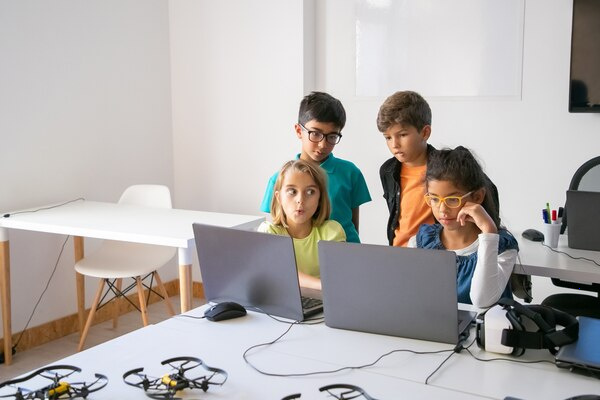
Moreover, AI bots serve as accessible 24/7 tutors, providing immediate feedback and support for students who may need additional help outside of standard classroom hours. This constant availability helps break down the barriers of time and place, allowing learning to become a more fluid and ongoing process. Students can benefit from instant clarification of doubts, facilitating continuous learning and reducing the gap between classroom sessions.
In addition to personalized learning, AI bots are proving instrumental in creating more inclusive educational environments. For students with disabilities, AI technologies can offer critical support by providing alternative communication methods, personalized assistive tools, and more accessible learning formats. This technology has the potential to ensure that all students, regardless of their individual challenges, have equitable opportunities in education.
Educators, too, stand to benefit significantly from the integration of AI bots. By taking over administrative tasks and certain elements of instruction, AI frees up teachers to focus on aspects of teaching that require a human touch, such as fostering creativity, critical thinking, and socio-emotional learning. It allows educators to step into more of a mentorship role, guiding students through complex problem-solving and nurturing the skills necessary for future success.
While the potential advantages are substantial, the incorporation of AI bots in classrooms is not without challenges. Concerns regarding data privacy and security are paramount, as the sensitive information used by AI systems needs robust protection measures. In addition, there is the risk of over-reliance on technology, which could inadvertently de-emphasize the importance of interpersonal skills and face-to-face interactions.
Moreover, the effectiveness of AI bots depends heavily on the quality of the data they are fed and the algorithms used to interpret it. Inaccurate or biased algorithms can perpetuate existing inequalities or create new ones, emphasizing the need for vigilant oversight and continuous refinement of AI systems in education.
Despite these challenges, the integration of AI bots in the classroom is accelerating, driven by their vast potential to transform education. As educators, policymakers, and technology developers continue to explore and refine these tools, the aim will be to create an educational environment that harnesses the best of both human and artificial intelligence. This fusion promises a future where education is not only more efficient and effective but also more inclusively tailored to the needs of every learner.
In conclusion, AI bots are poised to play a transformative role in the future of education. As these technologies evolve, they will continue to provide powerful tools for personalized learning, inclusivity, and educational efficiency. By embracing these innovations while also thoughtfully addressing potential drawbacks, we can foster an educational system that equips students with the skills and knowledge they need to thrive in an increasingly complex world.